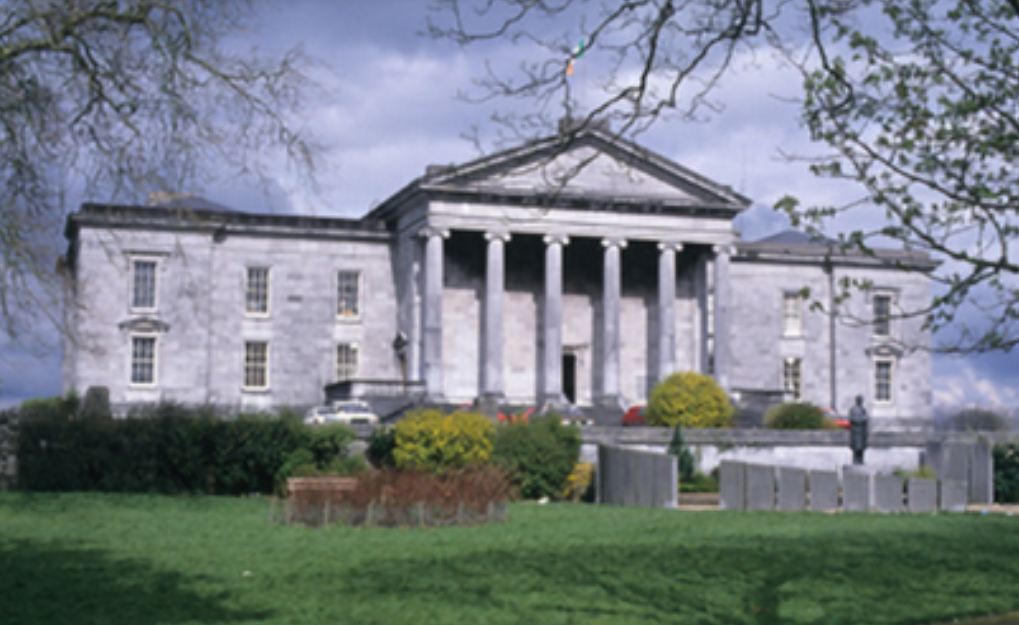

From the Herald (Dublin), 16 April 1949, the interesting reaction of some members of Clare County Council to a suggestion by the then County Registrar that lawyers’ benches in lovely Ennis Courthouse (image above, via Buildings of Ireland) be re-upholstered.
“HARD SEATS FOR COUNCIL: SOFT SEATS FOR COUNSEL
‘Herald’ Staff Reporter
When the Clare. Co. Council received an application from Mr M Killeen, Circuit Court Registrar, for upholstering of barristers and solicitors benches in the courtrooms at Ennis Courthouse, Mr M Hennessy said that members of the Council sat all day on hard chairs trying to do the business of the ratepayers, and he did not see why barristers and solicitors could not sit for an hour or two in court without being supplied with plush cushions and all the rest of it. He was totally opposed to all that sort of thing.
Mr W MacNamara said judges and barristers were well paid for the work they did and there was no need for the Council to supply them with soft cushions.
Mr P Begley said only for the judges and barristers decent people could not transact their business.
Mr P O’Loughlin said the application catered for only one section of the court. What about the jurymen? Were they not entitled to soft cushions also? The Council should cater for the whole lot if they decided to take action in the matter.
The Chairman (Mr Sean Brady) pointed out that Mr Killeen was in complete charge of the County Courthouse and at all times had been a most reasonable man in his dealings with the Council. When the Council wanted the use of the courthouse grounds for their workshop, and a big bill had subsequently been presented by the Minister for Justice, Mr Killeen solved the problem in a manner befitting the gentleman he was.
They should meet reason with reason and extend the same courtesy to Mr Killeen as he had extended to them. As a matter of fact, it was only through his courtesy that they were allowed the use of the building…
By 15 votes to three, the County Manager… was requested to consult with Mr Killeen and obtain tenders for the work.”
What was provoking the above outbursts? Hardly money envy – the first half of the 20th century was far from financially lucrative for the Irish legal profession.
Possibly some of the anger previously reserved for the British establishment was now directing itself at that arm of the state still, to outward appearances, operating in much the same way as it had done prior to 1922?
Would things have been different had a greater effort been made by the Irish Free State to distinguish the new legal system from that previously in place under British rule?


Leave a Reply