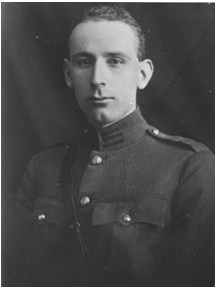

From the Galway Advertiser, 4 April 1946, this uplifting account of a heartfelt welcome accorded to former barrister and Circuit Court Judge Cahir Davitt on his first appearance in Tullamore after his elevation to the High Court bench:
“WELCOME FOR JUDGE
Mr Justice Cahir Davitt attended at Tullamore on Thursday week for a sitting of the High Court on Circuit.
Welcoming the Judge, Mr. Jas Rogers, solr., said he was offering his lordship a cead mile failte on this, his first visit, to the Midlands as High Court Judge. ‘I should like to say that our mutual friend, Mr Kenneth Kennedy, solicitor, is unavoidably absent,’ continued Mr Rogers. ‘He regrets it very much and so do I, because he is one who will remember the day, now nearly thirty years ago when he and I noticed a bright-eyed, dark-haired stranger in court. On inquiry we learned that he was a young man recently called to the bar, who had joined the Connacht Circuit, to which this county at that time belonged. If I tell you the whole truth, I should describe him as a handsome young barrister (laughter). He held the revered and historic name of Davitt, but it was not by the adventitious aid of any ancestry, but by sheer industry and ability and the loyal observation of the high traditions of his profession, in a few short years he took a leading place in the Junior Bar here. It was to our regret that after two or three years he went to answer more strenuous and perilous calls of duty, and, as we know, his was one of the first appointments made by the Irish government to the Circuit Court, and his record in that office was such as to vindicate his elevation to a higher and greater office.
This is the first opportunity we have had, and we want, with all our hearts, to congratulate you, and, if I may say so, with genuine respect and appreciation of the personnel of the High Court, we wish to add our congratulations to the High Court Bench on its accession of strength. In welcoming your lordship here to-day, we welcome you rather as a man and an old and valued friend, and through the ritual of dignity and trappings that are proper to the High Court we discern, as I say, the man, perhaps I should say indeed, the boy, the modest, bright-eyed, chivalrous boy of nearly thirty years ago. We wish and hope that his days will be long in the land.’
Mr JA Ennis, Co. Registrar, associated himself with the welcome, and said some remembered him as a practising barrister in the courts functioning at that time. He (Mr Ennis) thought it was the late Oliver Wendel Holmes who, when receiving the congratulations of his friends on one occasion, was asked if he was the son of the Oliver Wendel Holmes, and replied: ‘Oh no; he was my father.’ That applied with equal force on this occasion, and with Mr Rogers he wished his lordship a long period of success in the High Court.
Returning thanks, Judge Davitt said he found it difficult to recognise himself in the very handsome portrait painted of him. He remembered his first years in circuit in Tullamore, when he made purely formal appearances, but subsequently he came there on serious business, practising before the late Judge Fleming and the late Judge Wakely, and he had very pleasant recollections of those days. At that time his main opposition was Judge Shannon, with whom he had long been associated in the Circuit Court, as he had been with Mr Kenneth Kennedy at the Bar. Other practitioners recollected the time when the Courthouse in Tullamore was not available, and when they had to discharge legal business under difficulties. He had very pleasant recollections of his association with the county. While everything Mr Rogers and Mr Ennis had said was not strictly accurate, he thanked them for their very kind remarks.”
As the son of Irish land reform activist Michael Davitt, who had lost his arm while working as a child labourer in an English cotton mill, Davitt’s elevation to the High Court bench not only epitomised the recent change in political regime but also demonstrated a degree of social mobility hitherto rare in the legal profession.
Judge Davitt’s upwards judicial progress had yet to peak at the date of his welcome to Tullamore. He subsequently went on to become the President of the High Court (1945-66) and, after that, a member of the Supreme Court (1966-76). Interestingly, during the Irish War of Independence, Judge Davitt had also acted as judge of the Dail courts established by Sinn Fein to act as substitutes for the official court system. Mary Kotsonsouris, in her seminal work, ‘Retreat from Revolution: The Dail Courts, 1920-24’ describes Davitt’s contribution as the keystone of the success of these courts, which de facto shut down business in the Four Courts for much of their period of operation.
Against this context, there is a remarkable serendipity to Davitt’s later judicial career – what could be more appropriate that a lawyer, who had, through use of his legal skills, so ably contributed the struggle for independence, would go on to hold almost every judicial position of note in the State, and later Republic, which came into being as a result of his efforts?
DIB entry for Judge Davitt here.


Leave a Reply