Judges
The head of the 19th century Irish legal system was the Lord Chancellor of Ireland (the premier judge in the Court of Chancery), with the Lord Chief Justice of Ireland (the premier judge in the Court of King’s Bench) coming next in precedence. There followed the Chief Justice of the Common Pleas in Ireland and the Chief Baron of the Irish Exchequer. All were assisted by puisne judges also assigned to the relevant court.
There was also a Rolls Court run by the Lord Chancellor’s Deputy, the Master of the Rolls in Ireland. Later, there was an Admiralty Court, a Bankruptcy Court, an Encumbered/Landed Estates Court and a Probate Court. All of these had designated judges presiding over them.
The above system was changed by the Supreme Court of Judicature (Ireland) Act 1877, which converted the original four courts of Chancery, King’s Bench, Exchequer and Common Pleas into divisions of a single High Court of Justice. By 1897 the four divisions of the High Court of Justice had been reduced to two: Chancery and King’s Bench. The 1877 Act also created a Court of Appeal in Ireland
The creation of the Irish Free State in 1922 was followed by the Courts of Justice (Ireland) Act 1924. This Act replaced the Court of Appeal in Ireland with a Supreme Court and a Court of Criminal Appeal. The High Court of Justice was replaced by a new High Court of the same name, but without divisions, and a Central Criminal Court took the place of the previous Assize jurisdiction of the High Court, which had involved High Court judges travelling outside Dublin to preside over trials for serious criminal offences.
-
Punning Rivalry Between Judges, c.1810
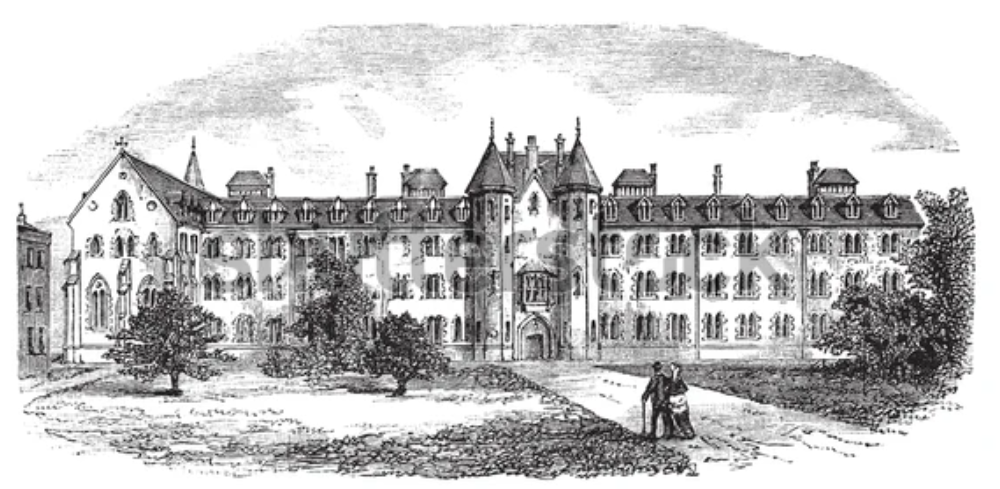
Irish judges of old were known for, and possibly even selected on the basis of, their punning skills, finely honed with expert precision to reflect the most current talking points of the time. The rise of Catholicism in early 19th… Continue reading
-
Future Lord Chancellor of Ireland Brings proceedings over Allegations Relating to his Prosecution of Robert Emmet, 1812
From the Belfast News-Letter, 28 January 1812, this account of proceedings for criminal libel initiated by barrister and later Lord Chancellor of Ireland William Conyngham Plunket against Gilbert and Hodges, booksellers, for sale of a publication which asserted that he… Continue reading

-
No Cleaning of Streets for Carlow Assizes after ‘Uncalled for’ Judicial Remarks about the Condition of the Town, 1887
In the 19th and early 20th centuries, Irish High Court judges went on assizes to each county several times a year to hear cases, often being met by brass bands, the town mayor etc. on their arrival. It was customary… Continue reading

-
A Judge May Fish: The Riverside Exploits of T.C. Kingsmill Moore, 1900-1960
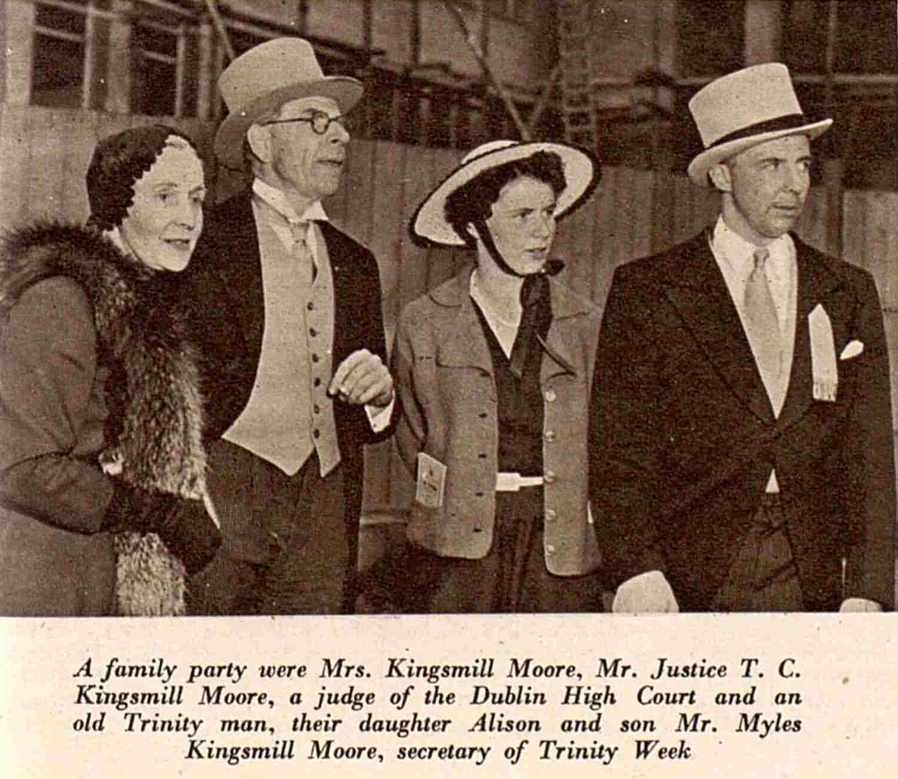
Irish Supreme Court judge Theodore Conyingham Kingsmill Moore and his family at the College Races, Trinity Week, from the Tatler, 5 June 1952. In addition to his legal achievements, Judge Kingsmill Moore was the author of the noted publication, ‘A… Continue reading
-
Chief Baron Palles Demands Respect from his Court, 1903
A court is not a theatre, and you will be removed – so declared legendary Irish judge Christopher Palles in 1903 when an unidentified woman in a blue dress clapped during a case in his court. See account below. Although… Continue reading
