Judges
The head of the 19th century Irish legal system was the Lord Chancellor of Ireland (the premier judge in the Court of Chancery), with the Lord Chief Justice of Ireland (the premier judge in the Court of King’s Bench) coming next in precedence. There followed the Chief Justice of the Common Pleas in Ireland and the Chief Baron of the Irish Exchequer. All were assisted by puisne judges also assigned to the relevant court.
There was also a Rolls Court run by the Lord Chancellor’s Deputy, the Master of the Rolls in Ireland. Later, there was an Admiralty Court, a Bankruptcy Court, an Encumbered/Landed Estates Court and a Probate Court. All of these had designated judges presiding over them.
The above system was changed by the Supreme Court of Judicature (Ireland) Act 1877, which converted the original four courts of Chancery, King’s Bench, Exchequer and Common Pleas into divisions of a single High Court of Justice. By 1897 the four divisions of the High Court of Justice had been reduced to two: Chancery and King’s Bench. The 1877 Act also created a Court of Appeal in Ireland
The creation of the Irish Free State in 1922 was followed by the Courts of Justice (Ireland) Act 1924. This Act replaced the Court of Appeal in Ireland with a Supreme Court and a Court of Criminal Appeal. The High Court of Justice was replaced by a new High Court of the same name, but without divisions, and a Central Criminal Court took the place of the previous Assize jurisdiction of the High Court, which had involved High Court judges travelling outside Dublin to preside over trials for serious criminal offences.
-
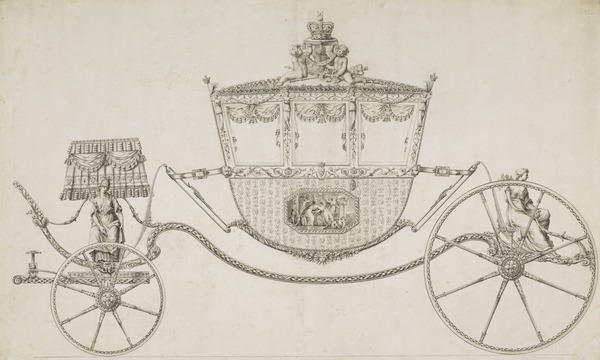
The Lord Chancellor’s State Coach, 1790-1938
How Ireland’s top judge used to travel – the State Coach of the unpopular 18th century Lord Chancellor of Ireland, John FitzGibbon, first Ear of Clare, as described in the Lurgan Mail, 5 March 1932. The coach is now in… Continue reading
-
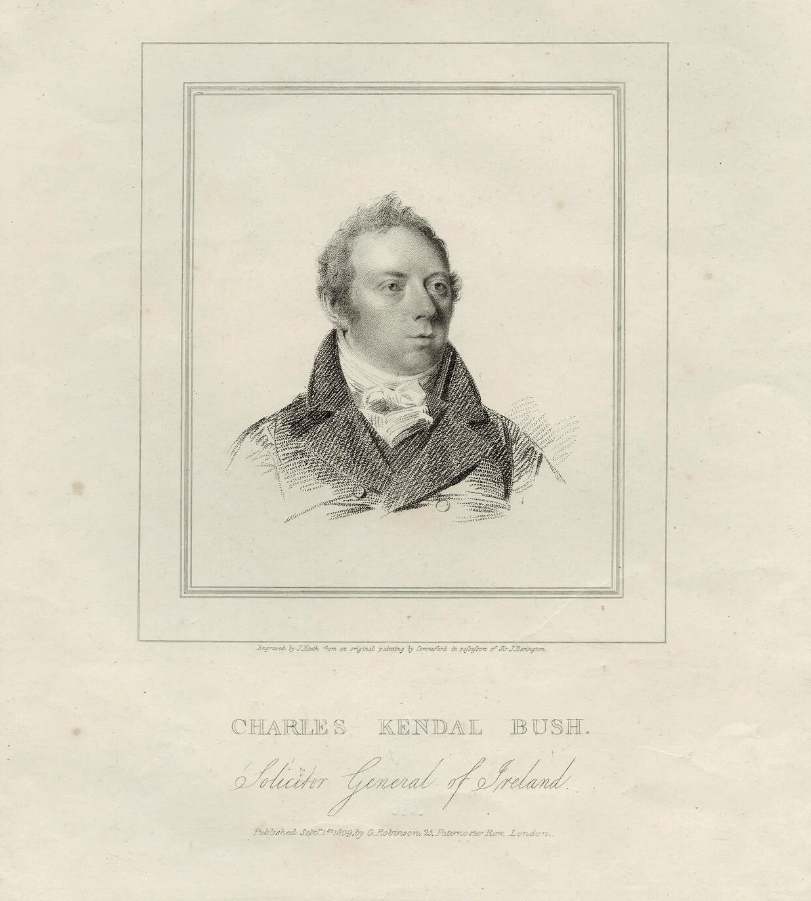
Anecdotes of a Lord Chief Justice of Ireland, by his Literary Great-Granddaughters, 1932
Between the leaves of ‘An Incorruptible Irishman, Being an Account of Chief Justice Charles Kendal Bushe, and of his wife, Nancy Crompton, and their Times 1767-1843,’ written by his great-granddaughters Edith Somerville and Martin Ross, better known as authors of… Continue reading
-
Judicial Dinner Parties in Merrion and Fitzwilliam Square, 1850s-1870s
During the years 1850 to 1870, Fitzwilliam Square, Dublin, was the locale of fabled dinner parties hosted by widowed James Henry Monahan, Lord Chief Justice of the Common Pleas, and his four attractive daughters. The Monahans, ‘a sprightly and accomplished family,’ lived… Continue reading

-
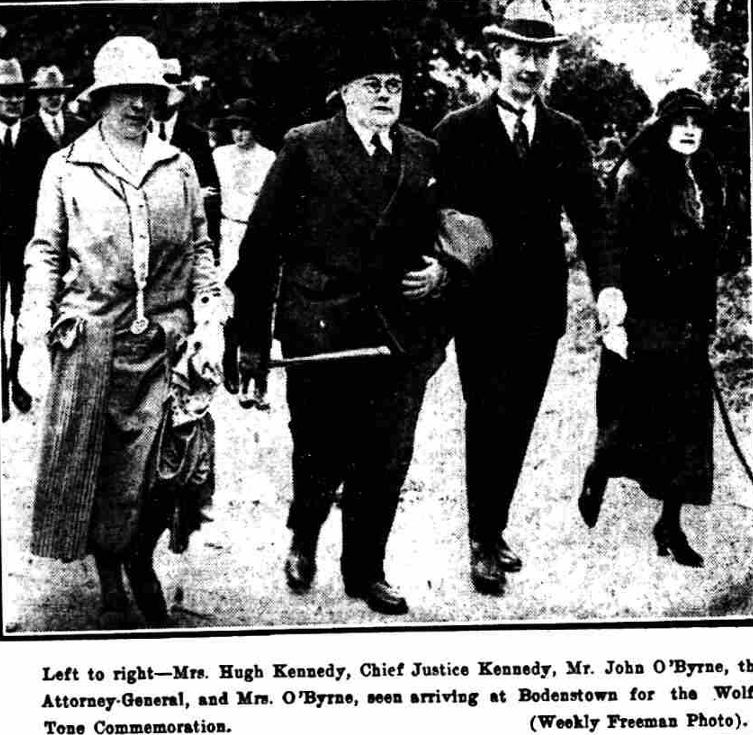
The Chief Justice At Bodenstown, 1924
Chief Justice of the Irish Free State Hugh Kennedy and Attorney-General John O’Byrne (later Mr Justice O’Byrne) arriving with their spouses at the 1924 Bodenstown ceremony to commemorate Irish barrister Wolfe Tone who had pre-exempted by suicide execution for his… Continue reading
-
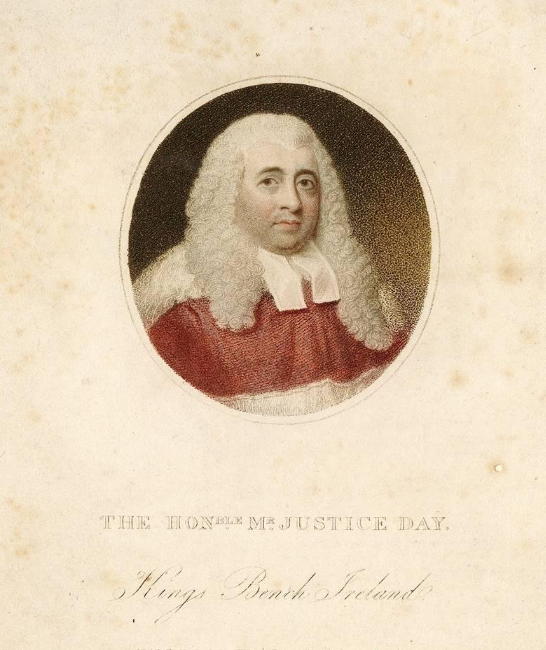
A New Day as Irish Judge Marries his Mistress on Instructions from their Shotgun-Wielding Son , c.1810
A fascinating story from the Kerry Reporter of 2 February 1907, about an early 19th century Irish judge forced to marry his mistress. Then, as now, they do things differently in Kerry, and what made this shotgun wedding particularly unusual… Continue reading